View my Biznik profile

Feng Shui Energy Advisory

Today is the start of the Year of The Water Dragon. The New Year is always a time for reflection and planning for the time ahead. In Feng Shui it is also the time to make note of the changing energies and how they relate to you, your home, and to your business.
Energy is in Constant Motion
Energy is in constant motion. We have learned about the Mayan calendar and its cycles and wonder what that means for the future. We can be more certain about the cycles described in Feng Shui and what they mean.
 Think of the energies, we call them stars as it is easier to imagine them, as people. Each star has its own personality. Some stars are happy and bring good energy with them. Maybe similar to that friend you always look forward to seeing when they visit. Some stars are less happy. That could be your hypochondriac uncle. Another star may have a nurturing energy. Could that be Grandma? Some like to fight and cause problems. I think you get the picture.
Who is Coming to Visit
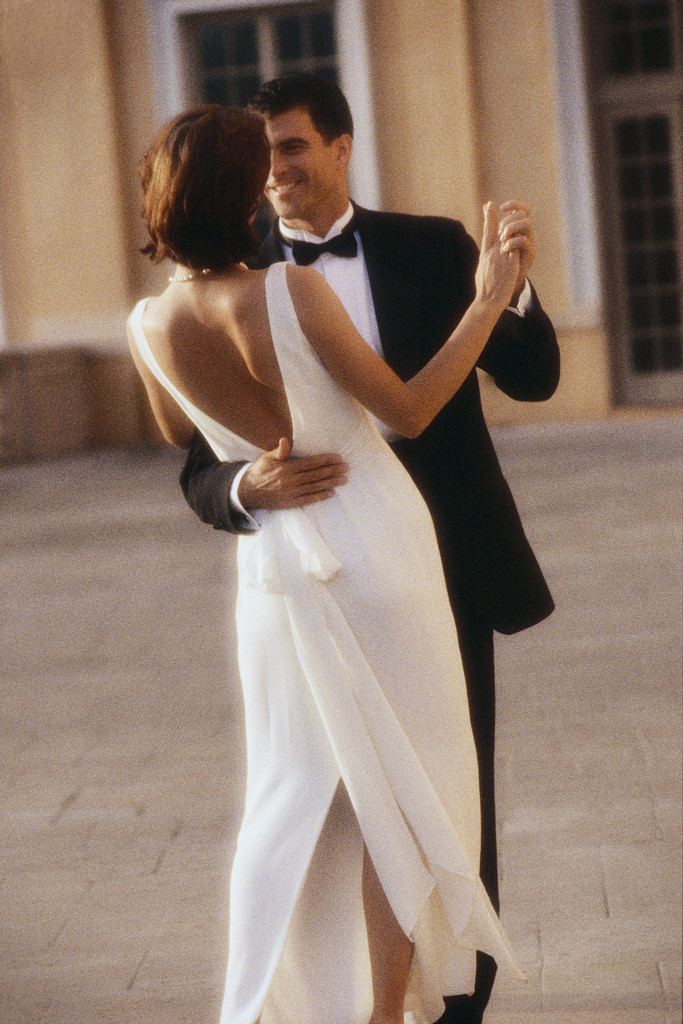 Now imagine you have a big house with many rooms. The stars-people- come to visit and each one has a room in the house. Every year they choose a different room to stay in. As you move around your house and spend time with them you are going to be affected by their energy. Oh and by the way they are sharing a room with one of the other people. So you have to take into consideration the interaction between them as well as with you. Some get along. Some don’t. Some are jealous. Some are celebrating. But some like to keep it quiet. Some are good dancers. Other couples step all over each other’s feet. Some are in a creative mood. Relationships are getting more interesting now aren’t they?
What to Do About It
Because of this, every year there are areas of your home or work place that require special care. That is one of the reasons why an annual Feng Shui update is advised. In 2012 there is an intense pair-up that can cause quite a bit of trouble. This only comes around every few years. Consult your Feng Shui advisor to determine which areas are beneficial for you this year as well as in which areas you should use caution.
If you want to create the best opportunities for success, and who doesn’t, you should take advantage of time-tested Feng Shui practices. Get in touch to arrange your consultation or update.

All rights reserved © Diane Kern 2012
Holiday Greetings 2011
Wishing everyone a happy holiday season and a prosperous and peaceful 2012

Thank you for reading Real Feng Shui Solutions.
all rights reserved © Diane Kern 2011
Year of the Dragon

We are coming up fast on the end of 2011 and the start of the New Year. And we can celebrate twice, but more on that later. Each year is ruled by an animal in the Chinese zodiac and 2012 is the Year of the Dragon. Each animal in the zodiac has its own special characteristics. It belongs to an element, a personality, direction, a time of year and a time of day.
Dragon is in charge
The dragon is ruled by wood and, is found in the spring portion of the year and gets along well with the monkey and rat. These are the people a dragon person feels the most affinity for and they will support him well. The hours of the day are also divided up and assigned to the 12 animals of the zodiac. We think of the day as 24 hours but the Chinese divide it into twelve-two hour periods. Dragon rules the hours from 7 AM to 9 AM. Just as in Western astrology we consider not only our sun sign but also our rising sign. In Chinese astrology you can consider the animal of your birth hour as an influence on your character. The dragon is at home in the East.
Dragon is a power animal
The dragon is one of the power animals and considered to be strong and self assured. They can be fiery, passionate and generous. On the other hand they can be arrogant, demanding over bearing and impetuous. Each animal has both positive and negative characteristics.
Are you a Dragon?
 Maybe or maybe not. Because the Chinese year is ruled by the lunisolar calendar and not the calendar that we use in the west, the New Year does not start on January first. Instead it usually starts around the fourth or fifth of February, changing slightly each year. Each year is represented by one of the animals of the Chinese zodiac. They are rat, ox, tiger, rabbit, dragon, snake, horse, sheep, monkey, rooster, dog, and pig. So when you look at the placements in a Chinese restaurant to find out your animal sign remember when the year begins. If you were born before the fourth or fifth on February you must take the animal of the previous year. If you were born on the day of the New Year you must know the hour of your birth to determine which animal is yours. Most people don’t know this but you do now.

Who else is a Dragon
Some famous dragon people are Al Pacino, Russell Crowe, Pearl Buck and Nicholas Cage.
all rights reserved © Diane Kern 2011
Developers Turning To Feng Shui
 Reprinted, in part, from Bernama.com this is the first time I
have heard the term environology, but I like it. It is exactly what we do as Feng Shui consultants-study land and built environments to create beneficial habitats.
_____________________________________________________________________
KUALA LUMPUR, Nov 14 (Bernama) — An increasing number of property developers are turning to environology or “feng shui” or geomancy as part of their planning to build better homes and offices and produce a win-win situation for them and buyers, says renowned Malaysian environology expert, Prof Master David Koh.
“It is of paramount importance for buyers to be able to live in harmony and for them to continue to prosper. As such, some property developers have begun to consult environology masters or consultants before they even start building,” he told Bernama in an interview today.
Koh, the founder and honorary life president of the Malaysian Institute of Geomancy Sciences (MINGS), takes the stance of “there is no bad land, there is only bad design” and hence believes that much can be achieved if environology is taken into consideration from as early as the planning stage of a building project.
Koh, who was recently appointed by Tsinghua University, one of the foremost universities in China, as a lecturer on environology for architecture, interior design, art and design, said the idea was to observe specific ways to look at the energy flow and tapping it to advantage.
“For example, the design of the road, the drainage, the location of the building all have an effect on the wellness of the buyer. When taking environology into consideration for architectural design and construction, emphasis is placed on space, building arrangements and their harmony with humans,” he explained.
Given these factors, Koh said more Malaysian property developers were now considering them when planning new projects on prime land as the location alone did not guarantee success.
He said location may play a big part in attracting initial buying interest in a development but its subsequent success depended on other attractive and beneficial factors as well.
_____________________________________________________________________
So when you are planning for development, relocation, or renovation don’t forget to include Feng Shui in your project. It makes a positive difference in the outcome. What are your plans?
Posted in Feng Shui Tips, Good Idea
Tagged Architectural design, environology, feng shui, land development
Leave a comment
Feng Shui Maintenance=More Money
 Everyone can use a little more money no matter what your income level. It would be a shame to let your hard earned cash dwindle for the lack of attention around your home. What do I mean by that? Do you have any neglected repair projects around your house? Have you taken a maintenance inventory of your property and belongings lately? If the answer to the first question is yes, and the second question is no, then you could be letting your money run away and not even know it. Items that are broken, damaged, dirty or non-functioning in any way affect your health and thought processes. When you are unhealthy or not thinking clearly this affects your ability to work effectively as well as your relationships.
 Let’s take that maintenance inventory. Walk around your house both inside and out. Carefully inspect all appliances, plumbing, electrical equipment. Is everything in good working order? Do you have a leaky pipe or a dripping faucet? There goes your money down the drain! Are your appliances working properly? Are they due for replacement or can they be fixed. For instance, the gaskets around your refrigerator can dry out preventing a tight seal. That’s cold cash being wasted! Now the electrical. Is your service up to date or are there extension cords snaking along the walls and under carpets? Do you have lamps that need rewiring? Money up in smoke!
 Now check your windows and doors. Do they open and close properly? Do you have cracked window glass? Do the doors sag? Are frames cracked and sagging? That money is just flying out the window! What about your walls? Is it time to refresh with a new coat of paint? That’s tired money just sitting around and not doing anything!
Ok, now think of all the things you have in your house. I know, that sounds overwhelming. You are looking for things that are broken, chipped, non-functioning, no longer fit, are no longer loved and no longer used. Get organized and discard the broken, repair those you wish to keep if you can, and donate those you no longer use. Be ruthless. Clutter is never good especially if it is useless stuff.
 So far we have dealt with items that can waste actual money (dripping faucets) and items that represent loss of money or a mindset that represents a lack of money ( holding on to useless items) Now do the same outside your home. Do you have piles of trash, garden refuse and broken equipment outside? Start a yard cleanup. Is there that ugly corner of your property you have been meaning to take care of? Deal with it now.
 When you are finished you will have a new outlook on life, renewed energy, clearer thinking and a more positive attitude. And that money will hang around a little longer giving you new opportunities.

all rights reserved ©Diane Kern 2011
DIY Feng Shui Can be Dangerous
Woman Injured After Practicing Faulty Feng Shui
Posted by P. Beckert this article points out the dangers of do-it-yourself feng shui. You wouldn’t do your own surgery so why would you try to heal your house or business without the proper knowledge and experience? If the subject of the article hadn’t been injuried it might be funny. (Who would want to be strung up from the ceiling? Why would the happy buddha enjoy it?) And was she really practicing Feng Shui at all, or just some popular misconception of Feng Shui?
Do you practice this kind of “feng shui”?
Gladys Schumwerner of Columbus, Ohio suffered a broken finger and several lacerations after the laughing Buddha she attached to a wire hanging from her ceiling fell, hitting her squarely in the left hand. It was the third in several unfortunate mishaps since Gladys decided to change her luck by re-arranging her home to allow the chi to flow more effectively.

“It’s called Feng Shui,” said Gladys from the emergency room of the Mercy Medical Center near her home, “and it is supposed to make your life better as you practice it.” But Schumwerner admits the only thing she’s gotten out of it so far is bad luck.

Just last week, Gladys was taken to the emergency room with slight burns on her scalp. “I was trying to arrange Tibetan prayer flags on by back patio,” said Gladys. “I’ve always loved the colorful square patches of material. Unfortunately, I lost my grip on the flags and the string of them fell across the lit citronella candle I had on a nearby table. Who knew those suckers were so flammable?”
Gladys admits she may have cut a few cosmic corners in trying to ‘Feng Shui’ her home and surroundings. But she says not everything was entirely her fault. For instance, she claims that the electric miniature ‘Abundance Fountain’ she bought at the dollar store was defective. “So much for saving money,” said Gladys. “That tripping incident cost me two chipped teeth and a sprained ankle,” she added with a slight whistle.
Asked if she was finished with trying to change her luck, Gladys said she wasn’t. “I still firmly believe in Feng Shui, but now I’m proof positive that it has a dark side. From now on, I’m gonna stick with what I know.” Which is? “Rabbits’ feet, four-leaf clovers, and lots and lots of prayer,” she answered.

See the original post here.
Posted in Bad Idea, Musings
Tagged abundance, do it yourself feng shui, feng shui fountains, fung schway, home feng shui, laughing buddha, prayer flags
3 Comments
Buying a Feng Shui Home
 Some people care about the Feng Shui of their homes. The time-tested principles of Feng Shui are value-added not only when it comes to real estate but also to your life, health, relationships, opportunities and weath. Feng Shui is not superstition or religion. And it’s about far more than your house number. It is worth the time for a buyer and their real estate agent to find the best house with the best possible Feng Shui. I thought you might find this article interesting. Find the link to the original article by Sarah Portlack of the Star-Ledger at the end.
When Cindy Chen, a real estate agent, was looking for a new home in East Brunswick for her family, her homebuilder agreed to not use the number 4 for the address, which in Cantonese sounds like the word for “death,” and instead built her a home at 6 Margaret Place.
On another East Brunswick street, Ann Long and her husband, who are originally from Guangdong Province, China, decided on a lot at No. 8 because the word for “eight” in Chinese sounds similar to “wealth.” The family then went through several architects to find someone who would alter the house layout to accommodate their ideal feng shui goals.

And, last year, real estate agent Michael Pennisi had clients back out on a home in Summit when they realized it was across the street from a funeral home, which could transfer negative energies to the home.
The normally daunting process of buying a home can become even more so when clients, armed with cultural superstitions or traditions, will rule out certain details of a house. In pockets of the state with the highest Chinese populations, like Edison, Jersey City, East Brunswick and Parsippany, real estate professionals said sorting through these kinds of criteria can further complicate the process, particularly now when other aspects like securing a mortgage are more difficult. The beliefs are more prevalent among Chinese-born homebuyers than their American-born children, agents and clients said, and are more imperative than simply a design choice.
“If you get some people that say, ‘I want to have skylights in my house,’ that’s not a deal-breaker for the most part,” said Pennisi, an agent with Coldwell Banker in Summit.
“Certain beliefs become deal-breakers,” he added. “It’s a prerequisite for buying a house.”
 Closing dates and move-in dates can be dictated by the lunar calendar, and certain numbers can play a role in home-buying. Whereas 13 is considered unlucky in Western culture, an address or unit that includes the number four creates the same caution for some Cantonese-speakers. But eight is considered so fortuitous in both Mandarin and Cantonese, clients will make offers on a house with as many eights as possible, like $488,888 for a house listed at $500,000, said Chen, who works at Weichert Realtors in East Brunswick. If the buyer and seller are both Chinese, it is often a successful strategy, said Chen, who is originally from Taiwan.
“I’ve done this a couple times,” Chen said. “It’s all for good luck, both for the buyer and the seller.”
Other homebuyers will consider how a house’s layout could affect which principles of feng shui — the belief that people, places and things have energy — would best help the individual meet certain goals at home. There is no one-size-fits-all solution, but tenets like where bathrooms and kitchens can be situated in the house, which direction the house must face, and its proximity to other structures like power sources, water or a funeral home can all play a role, said Valerie Bogdan, a feng shui consultant from Long Branch.
The specifics of feng shui differ for each person and the options are limitless, so learning which principles a particular homebuyer wants is all part of the job, real estate agents said. When Chen first meets with a client, she asks which details are important and what are non-negotiables. She keeps that list with her as she combs through listings.
“If they told me they don’t like the number, we skip that — we don’t even go that far,” Chen said. “Before we go out, I always email them (and) if we have a picture, they can see it. They will tell me if they want to skip this one or if we will go.”
The criteria can often make the process longer, Chen admitted.
“Sometimes we have to see more homes to avoid these details,” she said.
 Long and her family settled in East Brunswick after Chen referred them to an architect willing to adjust his designs to accommodate their feng shui aspirations. Six years later, Long said she still likes her home and considers it lucky.
“It is no. 8 and my house is good, and we are really good, too,” Long said.
Despite some of the details, there are still homebuyers whose priorities are more general, like location and price, even it means a compromise for another, more-traditional family member.
“In this market, what the buyer is looking for is still location, location, and the price has to be good,” said Hong Kong-native Sauling Lee, a broker associate with Davis Realtors in East Brunswick. “That’s what they are looking for, the other (details), they always can adjust.”
But one detail is universal, no matter the potential buyer’s culture or beliefs, said Phil Rivo of Armagno Agency in Jersey City.
“‘Happy wife, happy life,’” he said. “If the wife, or one of the partners, is happy, it overcomes all.”
Sarah Portlock: (973) 392-5994 or sportlock@starledger.com
see original post from NJ.com
Related articles
- Your Feng Shui Armchair (realfengshuisolutions.wordpress.com)
- Garden Feng Shui (realfengshuisolutions.wordpress.com)
Posted in Good Idea
Tagged buying a home, Feng Shui house numbers, Feng Shui real estate, fengshui
2 Comments
Your Feng Shui Armchair
Art should be something like a good armchair in which to rest from physical fatigue.— Henri Matisse
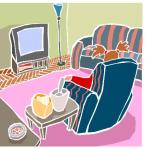 What do art and armchairs have to do with Feng Shui? Your home should be a place of respite from the rest of the world. It is the armchair where you rest from physical and mental fatigue. To design a home where this is possible is indeed an art.
The science and art of Feng Shui creates a habitat where you can receive nourishment in the form of qi or energy, through the use of time tested techniques This qi when directed properly creates better health, more satisfying relationships and greater harmony in the home. When you have these things you can rest in your armchair in comfort and satisfaction.
Posted in Feng Shui Tips
Tagged art and science of Feng Shui, Diane Kern, feng shui, Feng Shui Tips, Henri Matisse, physical fatigue
2 Comments
Short Stop Feng Shui-Derek Jeter
Derek Jeter
Baseball is our national pastime so I thought I would expand on last week’s article about Feng Shui of the Sport Stars. Here is a quick look at Derek Jeter’s new home in the Davis Islands area of Tampa. According to Tampa Bay Online, Mr. Jeter’s new home cost him $7.7 million. That hefty price gives him 30,000 square feet, 7 bedrooms, 9 bathrooms and two three-car garages. It is the largest home in the county.

T-Junction
Once again, being a celebrity doesn’t protect you from Feng Shui mistakes. The first mistake is having a road come directly to your front door. Situating your house on a T-junction is a big no-no for residential properties. (Businesses can under the correct circumstances take advantage of this) Roads carry energy in the direction of the traffic and in the direction of the land slope. This energy is very direct and ends up acting as a sha or negative energy. The energy is too strong and forceful for a home. The saving grace here is that there is a large courtyard to help slow down the flow somewhat. But it is definately not something you want to do in your home.

Irregular Shapes
Another issue is the shape of the building. It is irregular-very thin in the middle and much bigger on the sides. It looks similar to an “H”. Imagine a circle divided into 8 pieces. Now place that circle over the middle of the house. Observe how many of the 8 pieces have almost no house in them. Each part of the circle represents a person and relationship in the house. It also relates to certain body parts and illnesses. When there are missing or truncated parts there will be problems depending on what that missing piece represents. A square or slightly rectangular shaped building helps avoid these problems.

See Through Buildings
The last issue is seeing directly from the front to the back of a house. In this photo you can see straight in the front door through to the back. When you have this situation the energy that comes in through the front goes directly out the back and you have no opportunity to take advantage of it. This is especially pronounced in a hot area of the country where you have large openings to take advantage of natural cooling and ocean breezes. Energy is like food for you and your building. It is also money. So in order to get nutrition from the food and use of the money, we want it to collect and circulate inside our building.
If you want to know more about balancing the shape of your building, how to take advantage of incoming roads and water or remedy other Feng Shui issues in your property, be it business or residential, please contact me for a consultation.
All rights reserved ©Diane Kern 2011
Related articles
- Good Feng Shui, Still Have Problems (realfengshuisolutions.wordpress.com)
- Feng Shui of the Sport Stars (realfengshuisolutions.wordpress.com)
 realfengshuisolutions.wordpress.com